domingo, 20 de fevereiro de 2011
Elton John - Rocket Man
Elton John performs Rocket Man on his 60th Birthday at Madison Square Garden.


sábado, 19 de fevereiro de 2011
Tempestade solar . Tempestade geomagnética.

A maior tempestade solar dos últimos quatro anos já foi sentida na Terra, mas há expectativa de que ela ainda traga reflexos até hoje
18 de Fevereiro de 2011
Na última segunda-feira (14/2), ocorreu a maior erupção solar dos últimas quatros. As labaredas emitidas pelo Sol afetaram o campo magnético da Terra e seus efeitos devem ser sentidos até esta sexta-feira (18/2). Entre os reflexos, pode afetar sistemas de energia, sinais de GPS e interferir nas frequências de comunicação por satélite.
A NASA informou que, apenas oito minutos após o fenômeno, foi possível perceber alguns efeitos nos sistemas de comunicação por rádio e GPS, em especial na China, onde alguns serviços foram interrompidos como efeito da erupção solar.
A agência espacial dos Estados Unidos informa, no entanto, que o fenômeno solar foi relativamente fraco e seu principal efeito será uma visão ainda mais bonita da aurora boreal, com os tons de vermelhos, verde e roxo ficando mais acentuados no hemisfério Norte.
Cientistas estimam que o próximo grande pico das atividades solares ocorra em 2013.
Tempestade geomagnética.
As erupções solares acontecem quando um grande fluxo de radiação emitida pelo Sol atinge o campo magnético e a atmosfera da Terra. O distúrbio ocorre quando há ejeções maciças de massa da coroa solar. Quando fortes rajadas de vento solar atingem a Terra, as ondas de radiação se chocam com a magnetosfera, alterando a intensidade e a direção do campo magnético terrestre. Em casos extremos pode causar quedas de energia elétrica, interferência no funcionamento dos satélites de comunicações e de instrumentos de navegação, com efeitos imprevisíveis sobre o clima. As auroras boreais e austrais são espetáculos luminosos que ocorrem com as tempestades geomagnéticas.
O Sol
No princípio era uma imensa nuvem de gases e poeira. Ao longo de milhões de anos essa gigantesca nuvem foi se contraindo e se adensando, até formar o Sol. Do material que sobrou, formaram-se os planetas e outros astros do Sistema Solar.
A energia do Sol é gerada pela fusão nuclear no seu núcleo. Fusão é a colisão de átomos em alta temperatura e velocidade que os tornam um único átomo e liberam energia. Ou seja, o Sol é uma usina nuclear natural a 150 milhões de quilômetros.
O Sol é uma bola de plasma (o quarto estado da matéria - sólido, líquido, gasoso e plasma). As condições de pressão extrema e temperaturas inimagináveis transformam o hidrogênio em hélio. Calcula-se que a cada segundo 700 milhões de toneladas de hidrogênio são transformadas em hélio.
As erupções solares são explosões na superfície do Sol causadas por mudanças repentinas no seu campo magnético. A atividade na superfície solar pode causar altos níveis de radiação no espaço sideral. Esta radiação pode vir como partículas ( plasma ) ou radiação eletromagnética ( luz ). O Sol libera porções de energia eletromagnética quando uma gigantesca quantidade de energia armazenada em campos magnéticos, acima das manchas solares, explode, produzindo um forte pulso de radiação que abrange espectro eletromagnético, desde as ondas de rádio até os raios X e raios gama.
s gases emergem da superfície e são lançados na coroa solar, onde atingem temperaturas de mais de 1,5 milhões de graus centígrados, formando arcos chamados anéis coronais, enormes bolhas de gases ionizados com até 10 bilhões de toneladas. Depois, esfriam e voltam a se chocar com o Sol a uma velocidade próxima a 100 quilômetros por segundo.
As ejeções de massa coronal, que são partículas de altas energias, lançadas no espaço interplanetário podem transportar 10 bilhões de toneladas de gás eletrizado e superam a velocidades de um milhão de quilômetros por hora. Quando atingem a Terra, a magnetosfera do planeta desvia a maior parte da radiação, mas uma parte pode chegar à atmosfera superior, causando as tempestades geomagnéticas. As erupções solares são classificadas de acordo com o seu brilho em raios X no intervalo de comprimento de onda que vai de 1 a 8 Ångstroms.
Existem três categorias de "erupções":
Erupções classe X: são importantes e grandes erupções que podem desencadear a suspensão de diversas atividades eletromagnéticas, suspender as transmissões das estações de rádio em todo o planeta e produzir tempestades de radiação de longa duração.
Erupções classe M: são erupções de média intensidade que afetam as regiões dos pólos e rápidos bloqueios nas emissões radiofônicas.
Erupções classe C: são pequenas erupções e não afetam o planeta.
Em ciclos que duram em média 11 anos, o Sol passa por períodos de diminuição e aumento de suas atividades. Na superfície do Sol ou fotosfera, onde a temperatura superficial é de aproximadamente 6.000 graus celsius, é onde são observados os fenômenos. Nos períodos de aumento da atividade, as explosões de plasma na superfície do Sol podem levantar uma nuvem de partículas treze vezes maior que a Terra e lançar uma bolha para o Sistema Solar a mais de 1,6 milhão km/h.
O fenômeno conhecido como vento solar, arrasta gases evaporados dos planetas, poeira meteórica e raios cósmicos de origem galáctica. Quando interage com o campo magnético da Terra, provoca as tempestades geomagnéticas.
Logo após a invenção do telescópio, Galileu Galilei fez suas primeiras observações de manchas solares em 1611. Entre 1645 e 1715 poucas manchas solares foram observadas na superfície do Sol e em memória ao astrônomo que as estudou é chamado de Mínimo de Maunder. No Máximo, podem existir centenas de manchas em qualquer dia.
Por volta de 1843, o astrônomo amador Samuel Heinrich Schwabe descobriu que os números de manchas solares seguiam um ciclo de aproximadamente 11 anos, alterando entre máximos e mínimos. Descobriu-se então, que havia uma relação entre o número de manchas e erupções solares. Quanto maior o número de manchas, maior o número de erupções no Sol. Em geral as manchas solares se desenvolvem em pares e algumas manchas já observadas cobriam uma área maior que a do planeta Júpiter.
As zonas mais frias do Sol, denominadas de manchas solares, são intensos campos magnéticos que atraem e acumulam uma camada de plasma que impede a saída de prótons e elétrons emitidos, quando a pressão rompe a bolha formada ocorre a erupção solar. Estas regiões escuras na superfície do Sol, aproximadamente 1500°C mais frias, não surgem aleatoriamente em qualquer ponto. Primeiro aparecem nas latitudes médias do Sol, acima e abaixo do equador, e vão se expandindo, com o aumento da atividade solar, em direção ao equador.
A matéria jetada pelo Sol e que se desloca pelo espaço interplanetário é chamada de vento solar. O vento solar é formado por partículas de altas energias, atômicas e subatômicas, consistindo de elétrons, prótons e núcleos de Hélio, aceleradas acima da velocidade de escape gravitacional do Sol. Quando a atividade solar não é significativa, o vento solar é uniforme e com velocidade aproximada de 400 km por segundo. Mas quando há distúrbios solares violentos, o vento solar pode alcançar velocidades muitas vezes superiores as observadas normalmente.
A Terra recebe radiação de diferentes energias e origens do espaço, mas sua superfície está razoavelmente protegida por diversas camadas da atmosfera. A magnetosfera funciona como um escudo protetor de plasma, onde partículas carregadas são controladas pelo campo magnético que desvia a maior parte das partículas energéticas que chegam ao planeta. Um fluxo de radiação eletromagnética emitida pelo Sol chega à Terra constantemente e sofre influência do campo geomagnético e da atmosfera terrestre, que impedem que o planeta seja atingido diretamente e fazendo com que o vento solar flua em torno do campo.
Mas a magnetosfera pode se tornar perturbada e alterar sua intensidade e direção quando o Sol apresenta um número grande de erupções e nuvens de partículas solares de alta velocidade atingem o planeta. A radiação transborda a magnetosfera e ioniza outras regiões da atmosfera trazendo diversas conseqüências eletromagnéticas e climáticas.
A radiação solar pode chegar à Terra em uma ou duas horas após uma grande erupção solar, em seguida as "nuvens de partículas" de alta energia atingem o planeta durante alguns dias. Alguns dias depois são as partículas de média e baixa energia que conseguem penetrar em maior número a magnetosfera, provocando uma tempestade geomagnética. Nestas ocasiões as radiações atingem a baixa atmosfera, criando cargas elétricas isoladas que são descarregadas, causando interferências eletromagnéticas.
As intensidades das tempestades geomagnéticas, desde fracas até muito fortes, podem causar diferentes danos elétricos, principalmente nas latitudes altas, onde se concentram seus efeitos. O fluxo magnético vindo do Sol pode provocar fortes ondas de descarga elétrica nos cabos de transmissão de força, causando: curtos-circuitos, queima de equipamentos, panes em sistemas elétricos e redes de distribuição de energia, prejudicando circuitos integrados, computadores de bordo, satélites, foguetes etc.
Em caso extremo podem causar blecautes nos sistemas de transmissão e nos transformadores de energia elétrica das cidades, com muitos prejuízos para indústrias, residências, hospitais e empresas. Em 1989 uma tempestade impediu o funcionamento de usinas nucleares nos EUA, isso pode deixar grandes regiões sem energia elétrica por semanas. Também pode haver indução de tensão ao longo de condutores ao nível de aterramento, afetando linhas de dutos de gás e petróleo.
A radiação de uma tempestade geomagnética afeta os equipamentos eletrônicos dos satélites, prejudicando as comunicações. Os sistemas, cada vez mais, miniaturizados se tornam mais vulneráveis e microchips danificados podem mudar comandos de softwares nos computadores de bordo. Em uma tempestade geomagnética as camadas superiores da atmosfera se aquecem e se expandem, e podem mudar a altura, retardar ou modificar a órbita dos satélites que podem ser danificados ou perdidos com o decaimento de suas órbitas.
Esse foi um dos motivos da queda do laboratório de estudos norte-americano Skylab, em 1979. Os satélites que passam pela América do Sul estão mais suscetíveis a problemas pela anomalia magnética do Atlântico Sul, que permite que as partículas energéticas emitidas entrem com mais facilidade na região. Os sistemas de comunicação como TV a cabo e aparelhos celulares, que operaram por sinais de satélites, pode sofrer interferências. Nas tempestades geomagnéticas a ionosfera se altera, devido as correntes e as partículas de energia, afetando negativamente as comunicações e rádio navegação.
Algumas interferências pelas ondas geradas agem como ruído nas freqüências e pode ser observada na tela da TV ou nas transmissões de rádio, isso degrada os sinais utilizados pelo GPS e outros sistemas de navegação, que perdem o sinal e tem sua precisão comprometida.
As linhas de telégrafo também já foram afetadas por tempestades geomagnéticas no passado.
Na camada chamada ionosfera, que está entre 50 e 500 km de altitude, o gás rarefeito da atmosfera terrestre é ionizado pela luz do Sol. Graças à ionosfera as ondas de rádio são refletidas, principalmente as chamadas “ondas curtas”, e podem circular ao redor da Terra, mesmo sem a ajuda de satélites.
A propagação das ondas de rádio na ionosfera é afetada por um grande numero de fatores físicos: raios cósmicos, partículas atômicas, radiação solar e outros. Durante períodos de grande atividade solar, a intensidade dos raios X que ionizam a atmosfera pode aumentar rapidamente, ionizando uma quantidade anormal de átomos e criando uma barreira aonde os sinais de rádio vindo de fora não entram e sinais originados na Terra não saem. Em períodos de máxima atividade solar, várias interrupções nas transmissões das ondas curtas, que podem ir de vários minutos a mais de uma hora, são observadas.
Nesses períodos os radioastrônomos ficam também impossibilitados de receber sinais de rádio do espaço exterior, principalmente durante o dia, quando a ionosfera fica ainda mais densa.
Quando as partículas eletricamente carregadas, que são expelidas pelo Sol durante uma erupção solar, chegam à Terra, a maior parte é desviada, mas quando parte consegue penetrar através da magnetosfera, chocam-se com os átomos de oxigênio e nitrogênio da atmosfera produzindo uma radiação no comprimento da onda da luz visível. Essa radiação é atraída pelo campo magnético do planeta para as regiões mais frágeis que são os pólos. Então, luzes coloridas surgem no céu causando um belo espetáculo chamado Aurora.
Durante diversas horas as auroras podem ser vistas em vários países localizados em alta latitude como Suécia, Finlândia, Noruega, Escócia e nas regiões norte dos Estados Unidos e Canadá. Quanto maior a atividade solar, mais intensa são as auroras. Quando aparecem próximas ao pólo norte são chamadas de Auroras Boreais e quando aparecem próximas ao pólo sul são chamadas de Auroras Austrais.
Em geral essas luzes são observadas em uma altitude aproximada de 60 km. As auroras podem apresentar forma variada como arcos, estruturas em bandas, raios, lâminas etc. Ao serem excitados pelos elétrons de alta velocidade do vento solar o espectro de radiação eletromagnética varia de infravermelho ao ultravioleta.
O espectro visível é dominado pela luz branca e verde produzidas pelas moléculas de oxigênio excitadas e luz cor de rosa emitida pelo nitrogênio. Mas as cores também podem ser amarela, vermelha, roxa e, com menos ocorrência, azul. As tempestades geomagnéticas produzem auroras multicoloridas e quando atingem uma intensidade muito alta as luzes passam a ser avermelhadas decorrentes da excitação dos átomos de nitrogênio.
Partículas de alta energia liberadas pelas erupções solares podem ser tão prejudiciais aos seres humanos quanto a radiação das explosões nucleares. A atmosfera e a magnetosfera da Terra em geral permitem a proteção adequada dentro de seus limites, mas os astronautas no espaço estão sujeitos a doses potencialmente letais de radiação. A penetração de partículas de alta energia em seres vivos pode causar danos aos cromossomos, o câncer, e muitos outros problemas de saúde e doses grandes podem ser fatais imediatamente.
Os prótons solares com energias superiores a 30 Megaeletronvolts (MeV) são particularmente perigosos. Em outubro 1989, o Sol emitiu partículas suficientes para matar um astronauta desprevenido sobre a superfície da Lua. Os astronautas na Estação Espacial Mir foram expostos a doses diárias de aproximadamente duas vezes a dose que receberiam em um ano em terra, apesar do campo magnético terrestre se estender a uma distancia suficiente para protegê-los. Durante a tempestade solar no fim de 1989 absorveram a dose de radiação anual em apenas algumas horas. A ISS possui um compartimento especial, dotado de grossas paredes, onde os astronautas ficam confinados sempre que se observa alguma atividade mais forte no Sol.
Os raios cósmicos e, principalmente, a radiação do Sol, podem causar sérias doenças aos astronautas, podendo levá-los à morte, por isso a previsão do tempo espacial é critico para prever com antecedência segura as ondas de radiação que ameacem os astronautas e os equipamentos das espaçonaves. Para que astronautas viagem à Lua ou Marte, em segurança, será necessário que a espaçonave possua um compartimento totalmente blindado para que possam se proteger das radiações intensas.
As partículas mais perigosas são os íons - átomos que perderam um ou mais de seus elétrons. Íons de alta energia podem danificar os tecidos e quebrar as cadeias de DNA, causando problemas de saúde que vão dos enjôos até a catarata e o câncer.
Cientistas descobriram, através do observatório Soho, que nuvem de íons, grande causadora de danos à satélites e seres humanos, é emitida pelo Sol junto com uma nuvem de elétrons. Felizmente a nuvem de elétrons viaja com mais velocidade no espaço do que a nuvem de íons, chegando primeiro na Terra. Com a detecção antecipada dos elétrons é possível prever a carga de íons que virá. A descoberta foi feita através de um equipamento a bordo do Soho, chamado COSTEP (Comprehensive Suprathermal and Energetic Particle Analyzer), que é capaz de contar as partículas que vêem do Sol e medir sua energia.
Até passageiros de aviões sofrem algum risco. Os eventos solares também podem produzir radiações elevadas a bordo de aviões voando em grandes altitudes. Embora estes riscos sejam pequenos, eles podem receber uma dose de radiação equivalente aos raios-x médico.
A monitoração dos eventos solares permite que a exposição ocasional seja monitorada e avaliada, e eventualmente que a trajetória e a altitude dos vôos sejam ajustadas, a fim de baixar as doses absorvidas pelos passageiros.
Existem evidências de que mudanças no campo geomagnético afetem sistemas biológicos. Estudos indicam que o sistema biológico humano pode ser suscetível às flutuações no campo geomagnético. Outro efeito observado foi a dificuldade de orientação dos pombos correio durante tempestades geomagnéticas. Os pombos e outros animais migratórios, tais como golfinhos e baleias, possuem bússolas biológicas internas compostas de magnetita.
Existem vários equipamentos para medir as variações do campo geomagnético, instalados tanto na Terra como no espaço. A monitoração e as transmissões de alertas geofísicos são muito importantes para que providências possam ser tomadas com antecedência contra os efeitos nocivos das tempestades geomagnéticas. Um aviso antecipado de uma eminente tempestade geomagnética permite que as distribuidoras de energia elétrica, por exemplo, evitem danos em suas redes e que satélites, naves espaciais e astronautas possam ser protegidos. Magnetômetros são práticos e versáteis instrumentos de medidas de campos magnéticos. Estes aparelhos são aptos em medir campos magnéticos de intensidade mínima e monitorar suas variações.
Sensores na Terra e no espaço observam continuamente porções especificas do espectro de energia do Sol para monitorar os seus níveis e indicações de eventos significativos. Uma importante ferramenta de monitoração é o satélite Soho, que atua na posição intermediária entre a Terra e o Sol e detecta as explosões na superfície solar, avisando com antecedência a chegada de tempestades radioativas à Terra.
sexta-feira, 18 de fevereiro de 2011
Nikola Tesla. Extremely low frequency (ELF).

Nikola Tesla. 1857-1943
Without whose work and discoveries we would not have Electricity as we know it today. While Michael Faraday discovered in 1831 that moving a magnet around a wire created an electric current, this discovery led on to many scientific discoveries which led to the direct current generator being invented along with many prototypes of the electric lamp, the Englishman Swan probably credited with the first practical working electric lamp in 1879 and a young Nikola Tesla who saw that Direct Current Electricity was not only wasteful but had severe limitations.
Edison Patented his electric lamp in 1880 which was based not only on the lamp but a direct current power distribution system to power it.
What people do not realise is that while Thomas Edison is called the "Father of Electricity", and did indeed patent the first commercial electric lamp; his system was based on Direct Current..As such the idea of Alternating current was frowned upon by Edison. He feared that; correctly; his system would be "taken over" by Alternating Current. Edison tried to discredit Tesla -Edison was a very aggressive, posturing, public image person while Tesla was a quiet, withdrawing, sensitive person. Two completely different people.
However Tesla had truth on his side; as George Westinghouse once said to him. Alternating Current was 100 per cent more efficient than Direct Current; and could travel extremely long distances over wires; while Direct Current could only travel a few Kilometers. An Alternator operating at full load is very very efficient as far as input to output. As Tesla said "it is in harmony with nature".
Teslas's life was as amazing as his discoveries. Like Faraday; Tesla knew that Electricity and Magnetism were unique forces in Nature. They make up one of the four forces that are part of the physical world we live in; and everything in it. Both men knew that Gravity; one of the other of the four forces; was also connected to Electricity and Magnetism.
Tesla's Alternating current "vision" came to him as he was in a public park and a poem from the German poet Faust about the dying of the day; and a new day being born across the world at the same time was being read. His immediate thoughts were of a spinning generator which reversed the poles. (an Alternator). He realised that this would provide unlimited power. He started writing on the ground in front of him with a stick; the now well known sine wave; used to signify
Alternating Current.
Tesla was very sensitive to all the senses. He could hear a clock ticking three rooms away. He had "visions" as he put it "sudden bursts of energy". Ordinary people thought him strange; he refused to shake hands with anyone as he put it - it -"disturbed his magnetic field". He had a fetish for washing his hands 30 or 40 times a day; could not stand fruit, and talked about outer space and possible life out there; which in the 1890's was considered as the sign of madness.
Tesla knew that the world is full of energy; and natural energy which is now called ELF or extra-low-frequency energy; is what he played around with. This is energy which exists as the Earth is like a giant generator in space; and properly harnessed this could provide us all with unlimited energy for our needs without needing to burn coal or use nuclear fission to produce electricity. Tesla looked forward to the present day where his Alternating Current power stations would be powered by
ELF technology.
Tesla's energy was based not on Electromagnetic but on a waveform called Scalar or Longitudinal.It's what the scientific community calls the "zero point energy" of the vacuum or the Scalar value of zero. It's what the Occult calls the "ether". Two intersecting Scalar waves form an Electromagnetic wave.
Tesla, with the financial backing of famous financier J.P. Morgan, built a Transmission tower which housed a resonating tesla coil. It was shaped like a pyramid and it's intention was to transmit energy around the world, from a single tower. Morgan provided the finance as Tesla had successfully developed Alternating Current, and with the backing of Morgan had built the world's first Alternating Current Power station at Niagara Falls, in the U.S.A. Morgan was receptive to Tesla and thought that Tesla was onto something, having been impressed with Tesla's Alternating Current Power station. HOWEVER when Morgan found out that Tesla wanted to transmit FREE energy from the tower it was literally burnt to the ground, and Morgan would have nothing more to do with it.
Shortly afterwards Tesla's lab was burnt to the ground, while Tesla was away, asleep in his home.In Teslas' time not much was known about the Ionosphere. We now know that this, along with the Earth form a Sphere-in-a-sphere capacitor fed by the solar winds, which are driven by the Van Allen belts which act as the driving current with the molten inner earth acting as the induced current. The atmosphere acts as a leaky capacitor. The Earth and Ionosphere are about 55 Kilometers apart. In short the Earth is like a giant generator in space.Tesla once said that we are like people in a boat, in a fresh water river, who are dying of thirst because we do not know how to scoop up the water from the sides of the boat.Tesla did not know that Scalar waves only became pronounced at extremely low frequencies but that is the basis of ELF technology today.Unfortunately this ELF energy has two major problems. Firstly it is Free. How can you charge for an energy which is all around us; all over the world ?.
And also more important; in the wrong hands it could destroy our planet. Used correctly it would be a boom for humanity; but would be more dangerous than letting off all the atomic bombs at once. It's literally a double edged sword or

Pandora's Box.
Both the Russians and the Americans have used Tesla'a ELF technology. Both sides have realised it's awesome capabilities. Tesla said that his system (see exmouth) would abolish war as no side would be able to launch a missile attack as a defence "shield" would stop any missile. Unfortunately the very same "shield" could destroy the planet by destabilising the earth's magnetic field; destroy completely the ozone layer; or any one of a number of major disasters including causing the planet to veer off course and collide with another planet.
This might sound like complete rubbish; but in August 1975 the Russians and Americans signed a draft agreement in Geneva at the International Disarmament Conference for the banning of 19 ELF weapons which could cause such catastrophes as Landslides; earthquakes; avalanches; volcanoes; tidal waves; as well as harnessing lightning bolts; guiding hurricanes to specific targets; melting the ice caps; changing the direction of rivers; generating Rain; hail; fog; snow; selectively destabilising the earth's magnetic field; and selectively destroying parts of the Ozone layer. US President Ford told the media that the US and USSR did not have these weapons but were signing the treaty "just in case".
This followed a 10 year tense standoff after the Nuclear Submarine US Thresher "disappeared" while it was on patrol, in April 1963. The Thresher was at the time the most advanced U.S. Submarine - It was awesome as far as military size. - Like the Titanic - Unsinkable. No sign of the submarine or it's crew or any debris have ever been found. The USSR was rumoured to have used a Tesla device to remotely destroy the craft. This was after the backdown from the 1962 Cuban Missile crisis. The day after the Thresher disappeared the USSR successfully deployed a Tesla Device to transmit an explosion to an underground location 100 miles north of Puerto Rico. The USSR did this to prove a point to the US.
But It was electrical pioneers like Michael Faraday who discovered the principle of electro-magnetism, in 1831 and Nikola Tesla who discovered Alternating Current in the later 1800s that were the real forces behind the scenes.
Tesla has somehow been written out of the history books but invented among other things the Fluorescent light, Robotics, the car coil, and ultra high speed electrical switches. Alternating Current Alternators. and Alternating current generation/transmission. His "Tesla coil" is used today in labs around the world, and is used for things like detecting leaks in vacuum apparatus. In 1899, two years before Marconi sent radio across the Atlantic , Tesla had built remote radio-controlled toy boats. Marconi worked for Tesla in Teslas own lab.
Tesla was obsessed with energy as a form of power, while Marconi only wanted to explore the prospect of transmitting energy as a form of communication. The worlds first Alternating Current power station was built in the late 1800's at Niagara Falls in the U.S. by Tesla with the backing of George Westinghouse and J.P. Morgan, the famous financier. Tesla made a rambling speech at the opening of the plant about how it should have been built earlier and about missed opportunities and left the audience thinking that the man was crazy.
Tesla was a very unique person. Edison was furious ( over his D.C. power being discredited) and began a scare campaign and rumour mill to discredit Tesla and destroy Westinghouse. Alternating Current meant the end of Edisons' power distribution system which was based on Direct Current. Only Teslas bailing out Westinghouse saved him, but as a result Tesla was completely broke, and died alone, completely disillusioned, in a hotel room in New York during the second world war, in 1943.
A great deal of speculation has occurred about the last years of Teslas' life. It was known that Tesla worked on the infamous Philadelphia Experiment that the US Navy conducted in the very early 1940's . This was designed to make navy boats invisible to radar (as part of the war effort) - the Germans had a magnetic mine that was causing a lot of problems for the allies..The unintentional result was the boat actually became invisible to the eye..the navy saw immense possibilities in this and conducted more tests, but placed personal on board instead of just an empty ship..
Tesla was gravely concerned when things went wrong (with the people on board) - It is one thing to transport an object through time and a completely different thing to transport a person..."time locks" are constant for objects but differ from person to person depending on date of birth, (etc). An individual must be separately configured to time travel. There is no fixed setting for all people. Tesla altered the settings on the equipment before walking out on the project..leaving a lot of high ranking people VERY upset...The scientist Newman tried to re-do the test, but it failed. The navy went on with the tests without Tesla, but it was difficult for them...(Many disasters happened..but the tests went on.) Tesla did not live much longer after that...There have been all sorts of statements made. One can only guess about what really happened.
Extremely low frequency (ELF) is a term used to describe radiation frequencies from 3 to 30 Hz. In atmosphere science, an alternative definition is usually given, from 3 Hz to 3 kHz. In the related magnetosphere science, the lower frequency electromagnetic oscillations (pulsations occurring below ~3 Hz) are considered to lie in the ULF range, which is thus also defined differently from the ITU Radio Bands.
ELF is a subradio frequency.
Some medical peer-reviewed journals refer to ELF in the context of "extremely low frequency (ELF) magnetic fields (MF)" with frequencies of 50 Hz and 50–80 Hz. United States Government agencies, such as NASA, describe ELF as non-ionizing radiation with frequencies between 0 and 300 Hz. The World Health Organization (WHO) have used ELF to refer to the concept of "extremely low frequency (ELF) electric and magnetic fields (EMF)" and have also referred to "ELF electric and magnetic fields in the frequency range >0 to 100,000 Hz (100 kHz)." The WHO also stated that at frequencies between 0 and 300 Hz, "the wavelengths in air are very long (6000 km at 50 Hz and 5000 km at 60 Hz), and, in practical situations, the electric and magnetic fields act independently of one another and are measured separately."
The United States Navy utilized extremely low frequencies (ELFs) as radio band and radio communications. The Submarine Integrated Antena System (SIAS) was a research and development effort to communicate with submerged submarines. The Soviet/Russian Navy also utilized ELFs for submarine communications system, ZEVS.
Because of the electrical conductivity of seawater, submarines are shielded from most electromagnetic communications. Signals in the ELF frequency range, however, can penetrate much deeper. Two factors limit the usefulness of ELF communications channels: the low data transmission rate of a few characters per minute and, to a lesser extent, the one-way nature due to the impracticality of installing[dubious – discuss] a transmitter of the required size on a submarine (transmitters need to be of exceptional size for the users to achieve successful communication). Generally, ELF signals were used to order a submarine to rise to a shallow depth where it could receive some other form of communication.
One of the difficulties posed when broadcasting in the ELF frequency range is antenna size. This is because the antenna must be at least a substantial fraction of the size (in at least one dimension) of the wavelength of the frequency of the EM waves. Simply put, a 1 Hz (cycle per second) signal would have a wavelength equal to the distance EM waves travel through a given medium in 1 second. For ELF, this is very slightly slower than the speed of light in a vacuum. As used in military applications, the wavelength is ~299,792 km(~187,370 mi) per second divided by 50–85 Hz, which equals around 3,450 to 5,996 km (2,140 to 3,726 mi) long; by comparison, Earth's diameter is around 12,735 km (7,913 mi). Because of this huge size requirement and, to transmit internationally using ELF frequencies, the earth itself must be used as an antenna, with extremely long leads going into the ground. Various other means are taken to construct radio stations with substantially smaller sizes, such as electrical lengthening.
The US maintained two sites, in the Chequamegon-Nicolet National Forest, Wisconsin and the Escanaba River State Forest, Michigan (originally named Project Sanguine, then downsized and rechristened Project ELF prior to construction), until they were dismantled, beginning in late September 2004. Both sites used long power lines, so-called ground dipoles, as leads. These leads were in multiple strands ranging from 22.5 to 45 kilometres (14.0 to 28 mi) long. Because of the inefficiency of this method, considerable amounts of electrical power were required to operate the system.
There have been some concerns over the possible ecological impact of ELF signals. In 1984 a federal judge halted construction requiring more environmental and health studies. This judgment was overruled by a federal appeals court on the basis that the US Navy claimed to have spent over 25 million dollars studying the effects of the electromagnetic fields with results indicating that they were similar to the effect produced by standard power distribution lines. The judgment was not accepted by everyone and during the time ELF was in use, some Wisconsin politicians such as Senators Herb Kohl, Russ Feingold and Congressman Dave
Obey called for its closure. Similar concerns have in the past been raised about electromagnetic radiation and health.
Transmitters in the 20 Hz range are also found in pipeline inspection gauges, also known as "PIGs".
Some radio hams record ELF (or even lower) signals from very large homemade antennas, and play them back at higher speeds to catch natural fluctuations in the Earth's electromagnetic field. Increasing the playback increases the pitch, so that it is brought into the audio frequency range.
Naturally occurring ELF waves are present on Earth, resonating in the region between ionosphere and surface. They are initiated by lightning strikes that make electrons in the atmosphere oscillate. Though VLF signals were predominantly generated from lightning discharges, it was found that an observable ELF component (slow tail) followed the VLF component in almost all cases. The fundamental mode of the Earth-ionosphere cavity has the wavelength equal to the circumference of the Earth, which gives a resonance frequency of 7.8 Hz. This frequency, and higher resonance modes of 14, 20, 26 and 32 Hz appear as peaks in the ELF spectrum and are called Schumann resonance.
They have also been tentatively identified on Saturn's moon Titan. Titan's surface is thought to be a poor reflector of ELF waves, so the waves may instead be reflecting off the liquid-ice boundary of a subsurface ocean of water and ammonia, the existence of which is predicted by some theoretical models. Titan's ionosphere is also more complex than Earth's, with the main ionosphere at an altitude of 1,200 km (750 mi) but with an additional layer of charged particles at 63 km (39 mi). This splits Titan's atmosphere to some extent[weasel words] into two separate resonating chambers. The source of natural ELF waves on Titan is unclear as there doesn't appear to be extensive lightning activity.
Finally, huge ELF radiation power outputs of 100,000 times the Sun's output in visible light may be radiated by magnetars. The pulsar in the Crab nebula radiates powers of this order at the frequency 30 hertz . Radiation of this frequency is below the plasma frequency of the interstellar medium, thus this medium is opaque to it, and it cannot be observed from Earth.In electromagnetic therapy and electromagnetic radiation and health research, electromagnetic spectrum frequencies between 0 and 100 hertz are considered extremely-low-frequency fields. Since the late 1970s, questions have been raised whether exposure to ELF electric and magnetic fields (EMF) within this range of frequencies produces adverse health consequences.
In October 2005, WHO convened a Task Group of scientific experts to assess any risks to health that might exist from "exposure to ELF electric and magnetic fields in the frequency range >0 to 100,000 Hz (100 kHz)." Research has shown that ELF electrical and magnetic fields at a high-level short-term exposure have a negative impact on health (ICNIRP, 2003). However, in regards to recognized ELF safety standards, the "Health effects related to short-term, high-level exposure have been established and form the basis of two international exposure limit guidelines (ICNIRP, 1998; IEEE, 2002).
At present, these bodies consider the scientific evidence related to possible health effects from long-term, low-level exposure to ELF fields insufficient to justify lowering these quantitative exposure limits." A common source of ELF fields in the United States is 60 Hz electric and magnetic fields from high-voltage electric power transmission lines and secondary distribution lines, such as those found in residential neighbourhoods. The International Agency for Research on Cancer (IARC) has evaluated the scientific data and has classified ELF magnetic fields as being "possibly carcinogenic" or, in other words, that there is some evidence that EMFs may contribute to an increased risk of cancer to humans or animals. Epidemiological studies suggest a possible association between long term occupational exposure to ELF and Alzheimer's disease.
quarta-feira, 16 de fevereiro de 2011
Fernando Henrique Cardoso .Ph.D.
Tribute to President Fernando Henrique Cardoso ,big fan Nina Simone.
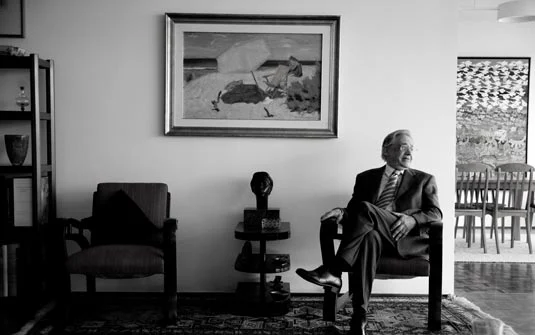
Fernando Henrique Cardoso ; born June 18, 1931 - also known by his initials FHC - was the 34th President of the Federative Republic of Brazil for two terms from January 1, 1995 to January 1, 2003. He is an accomplished sociologist, professor and politician. He was awarded in 2000 with the prestigious Prince of Asturias Award for International Cooperation.
Cardoso is descended from wealthy Portuguese immigrants. Some of his ancestors were politicians during the Empire of Brazil. He is also of Black African descent, through a Black great-great-grandmother and a Mulatto great-grandmother. Cardoso described himself as "slightly Mulatto" and allegedly said he has "one foot in the kitchen" (a nod to 19th Century Brazilian domestic slavery).
Born in Rio de Janeiro, he has lived in São Paulo most of his life. Cardoso is a widower (he was married to Ruth Vilaça Correia Leite Cardoso until her death June 24, 2008) and has four children. Educated as a sociologist, he was a Professor of Political Science and Sociology at the Universidade de São Paulo. He was President of the International Sociological Association (ISA), from 1982 to 1986. He is a member of the Institute for Advanced Study (Princeton), an honorary foreign member of the American Academy of Arts and Sciences and has penned several books. He was also Associate Director of Studies in the École des Hautes Études en Sciences Sociales in Paris and then visiting professor at the Collège de France and later at the Paris-Nanterre University. He later lectured at United States' universities including Stanford University and the University of California, Berkeley. He is fluent in four languages: Portuguese, English, French and Spanish.
After his presidency, he was appointed to a five-year term (2003–2008) as professor-at-large at Brown University's Watson Institute for International Studies, where he is now on the board of overseers. Cardoso is a founding member of the University of Southern California Center on Public Diplomacy's Advisory Board. In February 2005, he gave the fourth annual Kissinger Lecture on Foreign Policy and International Relations at the Library of Congress, Washington DC on "Dependency and Development in Latin America. In 2005, Cardoso was selected by the British magazine Prospect as being one of the world's top one hundred living intellectuals.
FHC is a well-known professor and intellectual. He earned his Bachelor in Social Sciences from Universidade de São Paulo in 1952, his Master in Sociology from Universidade de São Paulo and his Ph.D. in Sociology from Universidade de São Paulo. Cardoso has also received the Livre-Docência prize in 1963, the most important award given to an academic in Brazil, also from USP. In 1968, he received the title of Cathedratic Professor, holding the chair of Political Science at Universidade de São Paulo. In 1986 Cardoso was selected as a Fulbright Program 40th anniversary distinguished fellow and in that capacity was a visiting scholar and lectured at Columbia University on democracy in Brazil.
Cardoso currently gives speeches and classes abroad.
In the beginning of his political life, Fernando Henrique was elected Senator of the state of São Paulo for the former MDB, in 1982. In 1985, he ran unsuccessfully for Mayor of São Paulo against former President Jânio Quadros. Ahead in the polls, he let himself be photographed in the mayor's chair before the elections. Some attribute his loss in the election to this episode.
Re-elected for the Senate in 1986 for the PMDB, which substituted MDB after Brazilian re-democratization, he helped a group of parliamentarians of PMDB to abandon the party in order to create the Brazilian Social Democracy Party (PSDB). Until 1992, Cardoso served as Leader of the PSDB in the Senate. From October 1992 to May 1993, he served as Minister of Foreign Affairs under President Itamar Franco (PMDB).
From May 1993 until April 1994, he was Minister of Finance and introduced the Plano Real (Real Plan) to end hyperinflation. Buoyed by the success of the Plano Real, Cardoso decided to run for the Presidency and, backed by President Franco, won in the first round of elections, on October 3, 1994. Four years later, on October 4, 1998, after a Constitutional Amendment that allowed reelection, Cardoso won the Presidency again, with approximately 53% of the vote, while his closest challenger, Luíz Inácio Lula da Silva (PT), had about 32%.
Cardoso was succeeded in 2003 by Lula da Silva, who was running for President for the fourth time. Lula won in the runoff against the Cardoso-supported candidate José Serra. Lula's election has since been interpreted as a result of Cardoso's growing unpopularity in his second term.
Cardoso, often nicknamed "FHC", was elected with the support of a heterodox alliance of his own Social Democratic Party, the PSDB, and two right-wing parties, the Liberal Front Party (PFL) and the Brazilian Labour Party (PTB). Brazil's largest party, the centrist Party of the Brazilian Democratic Movement (PMDB), joined Cardoso's governing coalition after the election, as did the right-wing PPB, the Brazilian Progressive Party, in 1996.
Party loyalty was weak, and deputies and senators belonging to the parties in the coalition did not always vote with the government.
President Cardoso had difficulty, at times, gaining sufficient support for some of his legislative priorities, despite the fact that his coalition parties held an overwhelming majority of congressional seats.
In 2000, Cardoso demanded the disclosure of some classified military files concerning Operation Condor, a network of South American military dictatorships that kidnapped and assassinated political opponents.
A feature of Cardoso's administration was the continuity of the privatization program, launched by his predecessor Fernando Collor de Mello, of several government-owned enterprises such as Acesita, Telebras and Companhia Vale do Rio Doce, thus starting the deepest process of denationalisation in Brazilian history. Economists still contend over its long-term effects; research shows that the companies sold by the government achieved better profitability as a result from their disengagement from the State.
The years 1995-2002 witnessed a rise of the total public debt from 30 to 55.5 percent of GDP. It has been argued that this was due to external factors outside the control of the administration at the time, such as the devalorisation of the Brazilian real and the growth of the share of the debt denominated in US dollars.However, the greatest achievement of Cardoso was his landmark lowering of inflation. The month before the Plano Real started, June 1994, monthly inflation averaged 31.2 percent; it declined to monthly rates of between 1-3% in 1995, for a yearly total of 25.9 percent. It further dropped to 15.6 and 7.2 in 1996 and 1997, respectively.
As a result, major reforms planned by the Executive branch, such as changes in the tax system and in social security, were only partially approved after really long and tiring discussions. On January 8, 1996, he issued the controversial Decree 1775, which created a framework for the clear demarcation of indigenous reservations, which as part of the process opened indigenous territories to counter-claims by adjacent landowners.
Using his previous experience as Minister of Foreign Affairs and his prestige as an internationally famous sociologist, FHC was greatly respected on the world scene, building friendships with such leaders as Bill Clinton and Ernesto Zedillo.
Although he was respected abroad, in Brazil FHC had problems explaining his government priorities to Congress and people in general. Although claiming to be a leftist and supporter of social-democracy, FHC took some decisions in economy that led people to believe he became a neoliberal.
He also experienced personal problems with former ally Itamar Franco, his predecessor that later became Governor of Minas Gerais. FHC was also criticized for transforming the Constitution to his own benefit - creating reelection and allowing him to stay eight years in office. Most people think that his popularity in his first four years was gained with the continuation of Plano Real, but decreased in his last four years after different crisis in politics and in the energy department. He also publicly admitted that he could have done more for public security and for the creation of new jobs.
After stepping down from office, FHC has been giving lectures at Brown University, about Brazilian economic policy, urban development, and deforestation . Also, he dedicates his time to a personal institute created by him in São Paulo, based on the model of bodies created by former Presidents of the United States. He has written two books about his experience as President of Brazil, and has given many interviews. In 2006, he helped the campaign of the PSDB candidate for the Presidency, Geraldo Alckmin, and has said many times that he does not wish to run for office again. In 2007, he became a member of the editorial board of the Latin American policy publication Americas Quarterly, for which he is a regular contributor.
e has also taught as a guest lecturer at Sciences Po in Paris.
After leaving the Brazilian presidency, Cardoso also joined the Club of Madrid.

Fernando Henrique Cardoso ; born June 18, 1931 - also known by his initials FHC - was the 34th President of the Federative Republic of Brazil for two terms from January 1, 1995 to January 1, 2003. He is an accomplished sociologist, professor and politician. He was awarded in 2000 with the prestigious Prince of Asturias Award for International Cooperation.
Cardoso is descended from wealthy Portuguese immigrants. Some of his ancestors were politicians during the Empire of Brazil. He is also of Black African descent, through a Black great-great-grandmother and a Mulatto great-grandmother. Cardoso described himself as "slightly Mulatto" and allegedly said he has "one foot in the kitchen" (a nod to 19th Century Brazilian domestic slavery).
Born in Rio de Janeiro, he has lived in São Paulo most of his life. Cardoso is a widower (he was married to Ruth Vilaça Correia Leite Cardoso until her death June 24, 2008) and has four children. Educated as a sociologist, he was a Professor of Political Science and Sociology at the Universidade de São Paulo. He was President of the International Sociological Association (ISA), from 1982 to 1986. He is a member of the Institute for Advanced Study (Princeton), an honorary foreign member of the American Academy of Arts and Sciences and has penned several books. He was also Associate Director of Studies in the École des Hautes Études en Sciences Sociales in Paris and then visiting professor at the Collège de France and later at the Paris-Nanterre University. He later lectured at United States' universities including Stanford University and the University of California, Berkeley. He is fluent in four languages: Portuguese, English, French and Spanish.
After his presidency, he was appointed to a five-year term (2003–2008) as professor-at-large at Brown University's Watson Institute for International Studies, where he is now on the board of overseers. Cardoso is a founding member of the University of Southern California Center on Public Diplomacy's Advisory Board. In February 2005, he gave the fourth annual Kissinger Lecture on Foreign Policy and International Relations at the Library of Congress, Washington DC on "Dependency and Development in Latin America. In 2005, Cardoso was selected by the British magazine Prospect as being one of the world's top one hundred living intellectuals.
FHC is a well-known professor and intellectual. He earned his Bachelor in Social Sciences from Universidade de São Paulo in 1952, his Master in Sociology from Universidade de São Paulo and his Ph.D. in Sociology from Universidade de São Paulo. Cardoso has also received the Livre-Docência prize in 1963, the most important award given to an academic in Brazil, also from USP. In 1968, he received the title of Cathedratic Professor, holding the chair of Political Science at Universidade de São Paulo. In 1986 Cardoso was selected as a Fulbright Program 40th anniversary distinguished fellow and in that capacity was a visiting scholar and lectured at Columbia University on democracy in Brazil.
Cardoso currently gives speeches and classes abroad.
In the beginning of his political life, Fernando Henrique was elected Senator of the state of São Paulo for the former MDB, in 1982. In 1985, he ran unsuccessfully for Mayor of São Paulo against former President Jânio Quadros. Ahead in the polls, he let himself be photographed in the mayor's chair before the elections. Some attribute his loss in the election to this episode.
Re-elected for the Senate in 1986 for the PMDB, which substituted MDB after Brazilian re-democratization, he helped a group of parliamentarians of PMDB to abandon the party in order to create the Brazilian Social Democracy Party (PSDB). Until 1992, Cardoso served as Leader of the PSDB in the Senate. From October 1992 to May 1993, he served as Minister of Foreign Affairs under President Itamar Franco (PMDB).
From May 1993 until April 1994, he was Minister of Finance and introduced the Plano Real (Real Plan) to end hyperinflation. Buoyed by the success of the Plano Real, Cardoso decided to run for the Presidency and, backed by President Franco, won in the first round of elections, on October 3, 1994. Four years later, on October 4, 1998, after a Constitutional Amendment that allowed reelection, Cardoso won the Presidency again, with approximately 53% of the vote, while his closest challenger, Luíz Inácio Lula da Silva (PT), had about 32%.
Cardoso was succeeded in 2003 by Lula da Silva, who was running for President for the fourth time. Lula won in the runoff against the Cardoso-supported candidate José Serra. Lula's election has since been interpreted as a result of Cardoso's growing unpopularity in his second term.
Cardoso, often nicknamed "FHC", was elected with the support of a heterodox alliance of his own Social Democratic Party, the PSDB, and two right-wing parties, the Liberal Front Party (PFL) and the Brazilian Labour Party (PTB). Brazil's largest party, the centrist Party of the Brazilian Democratic Movement (PMDB), joined Cardoso's governing coalition after the election, as did the right-wing PPB, the Brazilian Progressive Party, in 1996.
Party loyalty was weak, and deputies and senators belonging to the parties in the coalition did not always vote with the government.
President Cardoso had difficulty, at times, gaining sufficient support for some of his legislative priorities, despite the fact that his coalition parties held an overwhelming majority of congressional seats.
In 2000, Cardoso demanded the disclosure of some classified military files concerning Operation Condor, a network of South American military dictatorships that kidnapped and assassinated political opponents.
A feature of Cardoso's administration was the continuity of the privatization program, launched by his predecessor Fernando Collor de Mello, of several government-owned enterprises such as Acesita, Telebras and Companhia Vale do Rio Doce, thus starting the deepest process of denationalisation in Brazilian history. Economists still contend over its long-term effects; research shows that the companies sold by the government achieved better profitability as a result from their disengagement from the State.
The years 1995-2002 witnessed a rise of the total public debt from 30 to 55.5 percent of GDP. It has been argued that this was due to external factors outside the control of the administration at the time, such as the devalorisation of the Brazilian real and the growth of the share of the debt denominated in US dollars.However, the greatest achievement of Cardoso was his landmark lowering of inflation. The month before the Plano Real started, June 1994, monthly inflation averaged 31.2 percent; it declined to monthly rates of between 1-3% in 1995, for a yearly total of 25.9 percent. It further dropped to 15.6 and 7.2 in 1996 and 1997, respectively.
As a result, major reforms planned by the Executive branch, such as changes in the tax system and in social security, were only partially approved after really long and tiring discussions. On January 8, 1996, he issued the controversial Decree 1775, which created a framework for the clear demarcation of indigenous reservations, which as part of the process opened indigenous territories to counter-claims by adjacent landowners.
Using his previous experience as Minister of Foreign Affairs and his prestige as an internationally famous sociologist, FHC was greatly respected on the world scene, building friendships with such leaders as Bill Clinton and Ernesto Zedillo.
Although he was respected abroad, in Brazil FHC had problems explaining his government priorities to Congress and people in general. Although claiming to be a leftist and supporter of social-democracy, FHC took some decisions in economy that led people to believe he became a neoliberal.
He also experienced personal problems with former ally Itamar Franco, his predecessor that later became Governor of Minas Gerais. FHC was also criticized for transforming the Constitution to his own benefit - creating reelection and allowing him to stay eight years in office. Most people think that his popularity in his first four years was gained with the continuation of Plano Real, but decreased in his last four years after different crisis in politics and in the energy department. He also publicly admitted that he could have done more for public security and for the creation of new jobs.
After stepping down from office, FHC has been giving lectures at Brown University, about Brazilian economic policy, urban development, and deforestation . Also, he dedicates his time to a personal institute created by him in São Paulo, based on the model of bodies created by former Presidents of the United States. He has written two books about his experience as President of Brazil, and has given many interviews. In 2006, he helped the campaign of the PSDB candidate for the Presidency, Geraldo Alckmin, and has said many times that he does not wish to run for office again. In 2007, he became a member of the editorial board of the Latin American policy publication Americas Quarterly, for which he is a regular contributor.
e has also taught as a guest lecturer at Sciences Po in Paris.
After leaving the Brazilian presidency, Cardoso also joined the Club of Madrid.
terça-feira, 15 de fevereiro de 2011
“Muito obrigado” ao Ronaldo.

- Nós, corintianos, somos gratos por tudo. Deixo meu “muito obrigado” ao Ronaldo, com seus defeitos e virtudes. É o maior ídolo que temos no mundo, como atleta e como ser humano.
- Ele pôs o nome do Corinthians onde nunca imaginávamos, triplicamos patrocínios e receitas, ganhamos e perdemos campeonatos. O mais importante é a exposição do nome do Corinthians e isso foi atingindo.
Andrés Sanchez.
HTML5 spec set for 2014...

It's been a work in progress for years, but there are a few more years to go yet before the next version of Hypertext Markup Language is finalized.
Specifically, the World Wide Web Consortium's HTML Working Group is set to announce today that it expects to anoint HTML5 as an officially recommended standard in the second quarter of 2014. That drawn-out schedule contrasts with another effort to make HTML a more fluidly updated "living standard."
"We started working [on HTML5] in 2007," Philippe Le Hegaret, the HTML activity leader for the W3C, told CNET. "We're targeting seven years for completing HTML5."
HTML5 will become the first new revision since HTML 4.01 was released in 1999. Among the features in the next-generation Web page description language: built-in video and audio, a "canvas" element for two-dimensional graphics, new structural labels such as "article" to smooth programming, and a codified process to consistently interpret the hodgepodge styles of real-world Web pages, even when improperly coded.
That doesn't mean interested parties won't be able to employ the new technology until 2014, though. On the contrary, key phases of the coming years' development involve getting feedback from real-world use that's already well under way and ironing out wrinkles that may arise implementing the standard in Web browsers.
At the same time, work continues on a broad range of HTML standards--geolocation, offline data storage, background processing, a direct browser-server communication conduit, and more--that aren't strictly speaking part of HTML5. And after the W3C releases the first "last call" draft of the standard in May--the point at which the W3C thinks the standard's features are set--the W3C plans to begin tackling the early stages of what it's calling HTML.next for now.
Clearly, then, the W3C isn't idling while browser makers and Web developers aggressively push ahead. But the W3C's schedule contrasts sharply with the speed at which the Web is developing today, growing beyond its role as a medium for static documents into a foundation for sophisticated applications. But the schedule also is not a great surprise given the complexity of HTML, the technological and political wrangling among the 55 organizations in the group, and an interest in HTML that's broadening beyond browser makers and Web programmers.
"When you want interoperability at a global scale across a broader industry, it takes time [and] more investment than single-platform stability," said Ian Jacobs, head of W3C marketing. For example, although the Web began as a phenomenon on personal computers, it's becoming a reality on mobile devices and another domain, TV, is coming, as exemplified by a recent W3C workshop dedicated to the subject.
"The key thing here is that there are lots of stakeholders, some of whom may not move at the same speed. One of the pieces of feedback from the TV and Web workshop is that TV manufacturers expect a shelf life of 7 years," Jacobs said. "Because the W3C has as its mission to make the Web available to everybody, we always have to take into account the multiple needs of multiple audiences."
The WHATWG's living document
Even as the W3C proceeds methodically, though, another group involved in developing HTML is changing its philosophy to an even more fluid arrangement. The WHATWG--Web Hypertext Application Technology Working Group--began work on what became HTML5 in 2004 when the W3C declared that the 1999 update to HTML4 was the final version and that the future lay with an incompatible standard called XHTML 2.0. That proved to be largely a dead end, however, and the W3C resumed HTML work in 2007 and now has phased out work on XHTML 2.0.
The WHATWG got its start as an open mailing list, but its founders and decision-makers all came from browser makers--Opera and Mozilla to start, with Apple joining later. HTML governance now essentially involves both the W3C and the WHATWG. One key figure is Ian Hickson, a former Opera and now Google employee who serves as an editor of the somewhat divergent versions of HTML maintained at both the W3C and the WHATWG.
In January, Hickson declared that at the WHATWG, HTML has now become a "living document," a specification that is constantly updated according to need. Abandoning version numbers that no longer are needed, Hickson ditched the term "HTML5" in favor of just "HTML." And he said he'd like to see the W3C follow suit.
Don't expect the standards group to do so, though.
The W3C has always revised its standards, Jacobs said. "That doesn't mean everybody wants the nightly build of a specification," he said, referring to the software development practice of building a new test version of software every night to include programmers' latest patches. "We also have stable versions of standards, because there are some communities who need those for the level of interoperability they require...We think both innovation and stability are valuable, and they are not mutually exclusive."
Another factor is intellectual-property rights--specifically, patents. Those who participate in creating the W3C's specifications agree not to sue those implementing the specification for infringement of any patents those participants own. It's a bit of legal reassurance in a technology world that has plenty of patent risks, but technically that assurance only comes with the final version of a specification.
The final schedule
What exactly will happen between now and mid-2014 with HTML5? Several steps, according to Le Hegaret and Jacobs:
In May 2011 comes the first "last call" draft of HTML5. This version is feature-complete, meaning no new features will be added, but that existing features will be refined. The W3C expects to deal with thousands of comments through this phase, some of them likely to lead to "substantial" changes.
Likely by the end of 2011, the W3C will issue a second last-call version and begin a second round of refinements.
In the second quarter of 2012, a new phase begins, in which "implementors" of the specification--browser makers, essentially--provide feedback. During this phase, the W3C concentrates on a suite of thousands of tests to see if implementations of HTML5 really do get the same results when interpreting a Web page's code.
The culmination of this phase is a "candidate recommendation" of the HTML5 spec and at least two "interoperable implementations"--in other words, two different browsers that produce the same results on the test cases. The implementors' feedback is scheduled for completion by the first quarter of 2014.
Last comes a final review period of about six weeks, then some time to get the promotional gears engaged.
Then, in the second quarter of 2014, HTML5 should be done.
"We're excited to be able to say we now have a time frame," Jacobs said.
domingo, 13 de fevereiro de 2011

Ai Roberto , até entendo que esta na idade , grana é importante , meu sai fora , some...no Corinthians não tem este lance de idolo , o Corinthiano ama o Corinthians, e não empregados do Clube , sai fora , some vai...
sábado, 12 de fevereiro de 2011
Anonymous Hackers Pay Back FBI Snitch with 50,000 Leaked Emails,

Aaron Barr.
Right now you can download a 4.7 gigabyte file full of about 50,000 emails stolen from a computer security expert named Aaron Barr. That's what happens when you cross the hacking collective Anonymous.
Hackers from Anonymous, best-known for attacks on Scientology and Wikileaks detractors, trashed Barr's online life Sunday evening after learning he planned to meet with the FBI tomorrow and hand over information he'd gathered about them. They defaced the website of HBGary Federal, the D.C.-based computer security firm Barr works for. Then they took over Barr's Twitteraccount, tweeting his social security number and a file containing 50,000 HBGary company emails. They even claim to have wiped his iPad.
Barr became a target of Anonymous after he appeared in a Financial Times article this weekend claiming he'd "penetrated" the group, identifying members by watching their chats and analyzing social networking profiles. He described a hierarchy of 30 core Anonymous members along with 10 who "are the most senior and co-ordinate and manage most of the decisions." Barr said the information could help authorities make arrests in their ongoing investigation into Anonymous' "Operation Payback" attacks against Mastercard and Visa in December; he cast Anonymous as an organized crime syndicate about to be blown open.
This pissed off Anonymous. They see themselves as an utterly democratic mass of untraceable Internet users who come and go as they please. It didn't help that members' confidence in their anonymity had already been rattled by a series of high-profile FBI raids.
"The article is complete crap. He's one of the millions of security tools who think they know what they're talking about," an Anonymous associate told us. "There's really no hierarchy.... no one can tell anyone else what to do." And from what we and others have seen, he's right.
So Anonymous hackers went to work. Their rage was further stoked when they discovered in Barr's email account a document containing the real names and personal information of suspected Anonymous members, along with indications he was going to sell it to the FBI. According to our source, the hackers decided to confront Barr directly. They identified the handle he'd been using to spy on their group for months: "CogAnon". Then they lured CogAnon into a chat room and revealed that he'd been compromised.
"All your emails were dropped. Meaning we know you were trying to sell your fucking research to the FBI. And the sad thing is the names and info in that document//research is all fucking fake… you could have gotten a lot of random innocent people arrested," wrote one Anonymous member.
"That's an old version of my research…. not trying to sell it... much has changed," Barr wrote.
"I saw your latest data and it's all the same shit," snapped back another Anonymous member.
Though they claim it was riddled with inaccuracies, the hackers promptly posted the document, as if to prove how little they cared about the information.
This is a typical mode of attack for Anonymous when they're up against an individual or lightly-defended target: Dig up confidential information through hacking or social engineering, then dump it on the Internet as a "fuck you." They did it to a bullying copyright lawyer in England, leaking a database of 5,000 porn pirates he intended to sue. And, yes, they did it to Gawker. No wonder they like Wikileaks.
In this case, Anonymous' attack will probably just bring heavier scrutiny. HBGary founder Greg Hoglund told Brian Krebs. "They didn't just pick on any company, but we try to protect the US government from hackers. They couldn't have chosen a worse company to pick on."
Trabalhadores de Tecnologia da Informação... GREVE JÁ !!!

GREVE JÁ !!! http://www.sindpd.org.br/index.asp
Em um comunicado enviado à imprensa nesta sexta-feira (11/2), o Sindpd (Sindicato dos Trabalhadores de Tecnologia da Informação) de São Paulo admite que a dificuldade em negociar o reajuste salarial com as empresas do setor de TI tem aumentado o sentimento de greve entre os profissionais da categoria.
O sindicato conta que, ao longo desta semana, visitou diversas empresas do setor para divulgar as informações sobre o impasse nas negociações e pressionar as organizações a rever a decisão de oferecer um reajuste de apenas 6,47% para a categoria. Entre as reivindicações, o Sindpd pede um aumento de 13,47%, direito ao PLR (Participação em Lucros e Resultados) e ao auxílio refeição, assim como a ampliação dos pisos salariais.
A estratégia do Sindpd é continuar divulgando panfletos nas principais empresas do setor sobre a negociação salarial ao longo dos próximos dias. Até o momento, o sindicato afirma que distribuiu cerca de 10 mil panfletos, além de ter veiculado um comunicado oficial no rádio e contratou nove carros de som para circular em diversas cidades, com o intuito de divulgar as reivindicações.
O Sindpd (Sindicato dos Trabalhadores de TI do estado de São Paulo) entrará com uma ação de dissídio coletivo na Justiça do Trabalho. A entidade reivindica um índice de 13,47% de reajuste para os salários do setor em 2011 – o índice deveria ser aplicado a partir de janeiro deste ano. A decisão de entrar na justiça aconteceu depois de o Sindpd ter desistido de negociar diretamente com o sindicato que representa as empresas que atuam na área de TI. Este último, ofereceu um reajuste de 6,47% – na última rodada de negociações, que aconteceu na última segunda-feira (1/2). Ainda durante reunião realizada hoje, 3/2, o Sindpd decidiu que, a partir da próxima semana, vai realizar assembleias nas maiores empresas do setor de TI. Em sua defesa, o sindicato informa que o mercado de tecnologia tem acompanhado um crescimento acima do PIB (Produto Interno Bruto) nacional e precisa compartilhar parte desses ganhos com os trabalhadores. A entidade informa ainda que está disposta a realizar acordos diretos com as empresas que aceitem negociar o reajuste salarial e aceitem os termos apresentados pelo Sindpd. Além do aumento de 13,47%, a entidade pede que os trabalhadores tenham direito ao PLR (Participação em Lucros e Resultados), direito a auxílio refeição e a ampliação dos pisos salariais.
PS. Estamos em uma encruzilhada , ou assumimos que é um jogo da classe patronal querendo manter dividida a categoria para manter integralmente seus lucros em detrimento dos trabalhadores , que se alimentam mal , quando se alimentam , que devem andar bem vestidos para compor o cenario hipocrita de decoração de ambientes das empresas , que o grande desenvolvimento no setor se deve unica e exclusivamente aos trabalhadores que criaram uma das maiores fontes de Imposto de renda do pais ., quando as peças não se encaixam por imposição da classe opressora., resta apenas o caminho da greve , OPRESSORES , quem detem o conhecimento , detem o poder.
quarta-feira, 9 de fevereiro de 2011
The Ikettes .

The Ikettes were originally the backing vocal group of female singers of the Ike & Tina Turner Revue but were so talented that they eventually began releasing their own records in addition to recording and touring with Ike & Tina. Their first single as a separate entity away from Ike & Tina was I’m Blue (The Gong Gong Song) released in 1962 with Tina appearing with some background vocals.
Throughout the 1960’s and into the very early 1970’s the line-up frequently changed but they were always a highlight whenever the Ike & Tina Turner Revue appeared on various television shows like Ed Sullivan, Smothers Brothers, Shindig, Where The Action Is, American Palace, Merv Griffin and many others. I always tried to catch the act on those shows for the music and certainly for Tina (her voice, and other things, were h-o-t) but I can clearly recall being captivated by the Ikettes, beautiful women who could sing and, damn, son, they could dance!
Another quality that caught my fancy were those amazing white miniskirts! (But we won’t go there.) Needless to say, the Ikettes were sexy, talented and full of explosive energy, just damn entertaining.
Among early members were Robbie Montgomery, Venetta Fields and Jessie Smith. Soon after P.P. Arnold would join the Ikettes as would Shelley Clarke who would go on to the Honeycombs. Other members throughout the run of the band would include such beautiful talents as Bonnie Bramlett, Jean Brown, Mary Brown, Brenda Holloway, Janice Singleton, Delores Johnson, Gloria Scott, Diane Rutherford, Jackie Stanton, Linda Sims, Marcy Thomas, Adrienne Williams, Debbie Wilson, Flora Williams and several others.
Among some of the singles the Ikettes released throughout the years included Troubles On My Mind, Heavenly Love, Prisoner of Love, (He’s Gonna Be) Fine, Fine, Fine, I’m So Thankful, Peaches & Cream, Da Doo Ron Ron, The Biggest Players and many others on such labels as Teena, Innis, Atco and others.
domingo, 6 de fevereiro de 2011
George Thorogood & The Destroyers -1 Bourbon, 1 Scotch, 1 Beer
Live on Rockpalast - German TV http://www.georgethorogood.com/
George Thorogood is always looking for the perfect George Thorogood song - even if it wasn’t his to begin with.
Although he’s had several hits of his own, Thorogood might be best known for turning blues tunes into palatable and groovy songs that have become staples of classic rock radio stations around the country. He has made a career out of singing songs such as John Lee Hooker’s “One Bourbon, One Scotch, One Beer,” Bo Diddley’s “Who Do You Love” and a bluesed-up version of Hank Williams’ “Move It On Over.”
For this, he makes no apologies, he says by phone on a recent break between concerts.
First, when he was learning the guitar, the songs of Elmore James and John Lee Hooker were the quickest for him to play. Second, there were dozens of artists trying the same thing he was.
“There was a market for it.
It was en vogue. They were all doing that, and they were all playing at the Fillmore (Auditorium, a famous music venue in California),” he says.
But, as Thorogood is quick to point out, he’s among the last of his breed. After more than a dozen albums spanning a 35-year career and several million albums sold, Thorogood is still hard at work and still touring with his longtime backing band, The Destroyers. The group’s current road trip will bring them to engagements in Canada, California, much of the South and, on Sunday, Fayetteville for a performance at the Walton Arts Center as part of the venue’s “George’s Presents” series.
Thorogood is touring insupport of his latest release “The Dirty Dozen,” which, like many of his previous efforts, mines heavily from the classics. Included on the album are cuts originated by Muddy Waters, Howlin’ Wolf, Bo Diddley and more.
Thorogood describes the song-selection process as something that’s painstakingly done. Only a song that feels like a George Thorogood tune is chosen.
“I’m like an actor who picks a script,” he says. “You pick something you can do.”
Criteria include how it sounds when backed by The Destroyers and also whether the publishing rights associated with the song will make it easy to record again.
Thorogood isn’t concerned with how well known the songs are in the first place.
He points to a song such as “One Bourbon, One Scotch, One Beer,” which Thorogood covered for his eponymous 1979 album. In 1979, that song wasn’t very popular, he argues.
“They aren’t classics. I make them classics,” he says.
Although he found popularity with covers and songs of his own creation, such as “Bad to the Bone” and “I Drink Alone,” Thorogood earned an equal reputation as a tireless touring act. In 1981, he and his band completed the 50 in 50 tour, which took them to 50 gigs in 50 consecutive days in 50 different states. That tour came to the long-gone Library Club in Fayetteville, where Thorogood estimates that 125 were in attendance.
The next night, the bandplayed for almost 80,000 at the Superdome in New Orleans, he says.
When he plays Fayetteville on Sunday, Thorogood promises to follow the same philosophy he did then. It’s worked so far.
“I’m just trying to catch them onto a groovy song,” he says.
LISTEN HERE!
GEORGE THOROGOOD
Date & Showtime: 7 p.m.
Sunday
Venue: Walton Arts Center, 495 W. Dickson St. in Fayetteville
Admission: $25.50-$100.50
FOR TICKETS, CALL 443-5600 OR VISIT WWW.WALTONARTSCENTER.ORG.
sábado, 5 de fevereiro de 2011
Whitesnake - Too Many Tears

Too Many Tears
I used to be the man for you,
Did everything you wanted me to,
So, tell me, baby,
What did I do wrong...
I told you what you wanted to know,
Precious secrets never spoken before.
All I'm asking,
Where did I go wrong...
Some things are better left unsaid,
But, all I do is cry instead,
Now, I've cried me a river,
Thinking how it used to be...
There've been too many tears falling,
And there've been too many hearts
Breaking in two.
Remember what we had together,
Believing it would last forever.
So, tell me, baby,
Where did I go wrong...
Everything I had was yours,
More than I have ever given before,
So, won't you tell me
Did I hurt you so bad...
I guess I'm fooling myself,
'Cause I want you and no one else.
And I can't understand
Why you're doing these things to me...
There've been too many tears falling,
And there've been too many hearts
Breaking in two...
Remember what we had together,
Believing it would last forever.
So, tell me, baby,
Where did I go wrong, where did I go wrong...
Now my heart is breaking,
My whole world is shaking,
'Cause I can't understand
Why you're doing these things to me...
There've been too many tears falling,
And there've been too many hearts
Breaking in two...
Remember what we had together,
Believing it would last forever...
So, tell me, baby,
Where did I go wrong...
Muitas Lágrimas
Eu era o homem pra você,
Fiz tudo que você queria,
Então, me diga, baby,
O que eu fiz de errado
Eu te contei o que você queria saber,
Segredos preciosos nunca contados antes
Tudo que estou perguntando é,
Onde eu errei
Algumas coisas é melhor não dizer,
Mas agora tudo que faço é chorar,
Eu chorei um rio,
Pensando em como costumava ser
Deve haver muitas lágrimas caindo,
E deve haver muitos corações
Que foram partidos
Se lembre do que tivemos juntos,
Acreditando que duraria pra sempre
Então, me diga, baby,
Onde eu errei
Tudo que eu tinha era seu,
Mais do que já tinha dado antes,
Então, não me diga
Que eu te magoei tanto
Eu acho que estou me enganando,
Porque eu quero você e ninguém mais
E eu não consigo entender
Por que você faz essas coisas comigo
Deve haver muitas lágrimas caindo
E deve haver muitos corações
Que foram partidos
Se lembre do que tivemos juntos,
Acreditando que duraria pra sempre
Então, me diga, baby,
Onde eu errei, onde eu errei
Agora meu coração está partido,
Meu mundo inteiro está tremendo,
Porque eu não consigo entender
Por que você faz essas coisas comigo
Deve haver muitas lágrimas caindo
E deve haver muitos corações
Que foram partidos
Se lembre do que tivemos juntos,
Acreditando que duraria para sempre
Então, me diga, baby,
Onde eu errei..
sexta-feira, 4 de fevereiro de 2011
Lesão por Esforço Repetitivo (LER) -indenização no valor de R$ 450 mil Reais.

A Terceira Turma do Tribunal Superior do Trabalho (TST) decidiu pela de uma caixa que havia adquirido a doença ocupacional conhecida como Lesão por Esforço Repetitivo (LER) após trabalhar durante 21 anos no Banco Santander Banespa S. A. A decisão teve como base o laudo pericial, que informou que houve um nexo causal, ou seja, uma conexão, entre a doença adquirida pela empregada e sua atividade no banco, fato agravado pela não tomada de providências da empresa para que fosse resguardada sua integridade física.
A referida empregada foi contratada em 1977, em razão de concurso público, e passou pelas funções de auxiliar de escrita, caixa e escriturária. Em 1998 ela se aposentou por invalidez. Ela alegou em sua petição que a doença adquirida foi proveniente da repetição da atividade, de um mobiliário inadequado para o serviço, além de excesso de trabalho e inexistência de pausas para descanso, pedindo, portanto, uma indenização pela redução na sua capacidade de trabalho, restituição de gastos com as despesas médicas e danos morais.
Em primeira instância o banco foi condenado a pagar R$ 150 mil reais por danos materiais e mais R$ 150 mil reais por danos morais. Ambas as partes recorreram. O Banco tentou provar que não era o responsável pela doença e a empregada afirmou ser este um valor insuficiente para a devida restituição. Em segunda instância, o Tribunal Regional do Trabalho da 9º Região manteve o valor dos danos materiais, contudo dobrou o valor dos danos morais, para R$ 300 mil reais. Insatisfeito o banco recorreu ao TST, questionando as duas parcelas. O relator do caso, ministro Horácio de Senna Pires, manteve a condenação determinada pelo TRT.
Assinar:
Postagens (Atom)